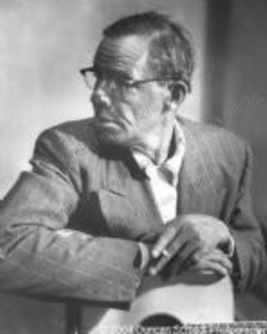
Walter E. Lewis
March 6, 1899--September 14, 1981

So there I was, sitting in my office, quietly contemplating suicide. I was watching a cattle call of Democratic presidential candidates on C-Span. In their five-minute speeches, they were laying it on thick with poll-tested, consultant-driven clichés of the Our Children Are Our Future variety. The thought of having to spend the next two years listening to this drivel set me wondering if it was literally possible to be bored to death.
On cultural issues, Richardson has the distinct advantage of not setting off any culture war vibes. He was in college in the late 1960s, but he was listening to the Beach Boys, not Janis Joplin. He was playing baseball in the Cape Cod League, not going to Woodstock. He idolized Humphrey, not McCarthy.


My favorite public education trick is to make the quality of a child's education dependent on the value of the property in their school district, because that teaches them about a cold, unfeeling universe governed by arbitrary standards.

I mean, don't today's much-discussed [sic] hipster parents notice that their claims to rebellious individuality are undercut by the fact that they are fascistically turning their children into miniature reproductions of their hipper-than-thou selves? Don't they observe that with their inevitable hummus snacks, their pastel-free wardrobes...
You know what a whole lot of religious people should give up for Lent? They should give up their exaggerated sense of grievance. Just a suggestion.
Another response is that the kids “miss out on so much”. Yeah, Daughter really misses that experience of perpetual teasing about her weight, and the physical bullying that went along with it, coupled with sadistic gym teachers who forced her to run a mile during PE class, in the hot sun.
It seems to me that the main source of socialization for many kids, especially smart ones in public school, is found in learning how to cope with the egos of teachers who can't teach and other kids who are uninterested in learning anything beyond dominating the social hierarchy.
I began this column last week with a quote attributed to Abraham Lincoln in which harsh treatment was deemed warranted for congressmen who willfully take actions during wartime that damage morale and undermine the military. It turns out to have been a paraphrase of our 16th president's attitude toward those who engage in such behavior, rather than a direct quote.
I regret the error and should, instead, have used the following, verbatim excerpt from a letter President Lincoln wrote in June 1863, as Robert E. Lee's army was on the march north to the fateful battle of Gettysburg. Mr. Lincoln wrote this letter after the arrest of a leading Confederate sympathizer legislator (or "Copperheads" as they were then known), U.S. Rep. Clement L. Vallandigham, Ohio Democrat. It forcefully explains the commander in chief's thinking about the latitude the Constitution affords to "silence" anti-war "agitators" whose conduct "damages the Army" and threatens to leave the nation without the military means to "suppress" its enemies...
Interestingly, the GOP has a significant likability advantage (and disadvantages almost everywhere else). John McCain may be unpopular with much of the Republican base, but Americans would love to go to the pub with him. Rudy Giuliani, too, seems like a good guy with whom to watch a baseball game at the bar. The super-polished Mitt Romney’s a tougher call, and Duncan Hunter would be a pain because he’d keep asking the immigration status of the busboys.
[T]he GOP front-runners (save perhaps Newt Gingrich) all have the advantage over Hillary. She may have star power, but you get the sense that most Americans would like to have their picture taken with her and then drink alone.