Tuesday, January 17

Happy Birthday


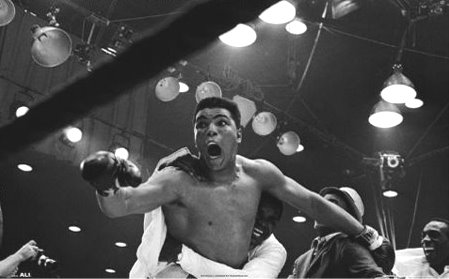
Muhammad Ali: born January 17, 1942

In one of his fights (Zora Folley?) shortly before they stripped him of his title, he slips five straights punches to the head moving only his upper body, his hands held straight down at his sides. I've found tears rolling down my face just watching it, not for what too many fights have done to him but for the incredible beauty of the man in and out of the ring.

Gotta get those DVDs.

Final Exam

A big thank you to all our participants. After two days of cleansing, spleen-venting, freeform comments, today the monopoly reasserts itself and you get to answer my questions. In keeping with our liberal, touchy-feely, soft-bias-of-low-expectations mission, you may answer as many or as few as you like, and there'll be no self-esteem-damaging "grading" or "labeling". But do try to color within the lines:

1. What is the purpose of public education? a) exposure of students to the widest possible variety of learning and instilling lifelong habits; b) achieving student competence in "core" subjects; c) identifying student aptitude; d) gearing students towards the current job market; e) providing comfy slots for low-SAT scoring college students.

2. Tying teacher "merit" raises, or job retention, to standardized testing should include: a) simple comparison of raw test scores; b) only improvement over baseline scores; c) comparison to national averages adjusted for socio-economic factors, class size, and per-student spending; d) giving teachers the right to fire underperforming students.

3. Vouchers: a) are a union-busting canard; b) are a wealth-redistribution system akin to Lotto; c) amount to taxing individuals without school-aged children without representation when used to send children to private schools or outside their district; d) should be prorated to the amount the parent pays for his own student, not the full per-pupil cost; e) are peachy.

4. The "single manager" principal system: a) will introduce accountability into the public schools; b) will result in petty-tyrant bean counters following the safest possible course; c) will replace the collective wisdom of specialists in various subjects with the careerist decisions of a desk jockey; d) should do wonders for domestic bullhorn sales.

5. Art, music, athletics, and vocational training: a) should be maintained as full partners in the educational process; b) should be eliminated and left to the private sector; c) should be paid for by a tax on museums, CDs, and professional sports.

6) The high relative performance of US fourth graders on international tests suggests: a) comprehensive public education in the US works well but we need to understand the reasons scores fall off by age 15: b) our primary teachers aren't unionized; c) there must be some hidden competition in elementary schools the Liberal Media won't tell us about: d) now would be a good time for a clip from Fast Times at Ridgemont High.

Bonus questions:

1) The period during which an IPS teacher can be dismissed for incompetence is: a) his first six months; b) his first year; c) his first two years; d) never, without a union-mandated flow chart as long as your arm.

2) The period after which an IPS teacher has tenure is: a) three years; b) five years; c) dependent on the subject; e) no tenure.

3) I choose a barber or hairdresser based on: a) his algebra scores; b) his grammar; c) whether he makes my hair look the way I want; d) trade union affiliation.

Thanks again. There's apple juice and healthy snacks in the lobby.

Monday, January 16

Holiday Greetings


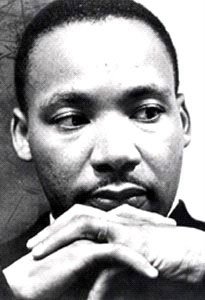
Robert Kennedy spoke to a mostly African-American crowd in Indianapolis the night Martin Luther King, Jr., was shot. You can download the audio here .

Happy Birthday


Jay (sometimes given as "Jerome") Hanna "Dizzy" Dean
January 16, 1910--July 17, 1974

The last National League pitcher to win thirty games, Diz and Peewee Reese doing the Saturday Game of the Week was a fixture of my childhood. Diz's English was not up to PISA standards: runners "slud" into base; good hitters had "parr" in their swings. "Nonchalant" was one of his favorite words. Players stood, knelt in the on-deck circle, swung or fielded nonchalant. Once after a play at first, when a cameraman was caught slightly off guard and the screen filled with a shot of Yogi from the knees down, Dizzy announced, "Here comes Berra's shin guards walkin' nonchalant back to the plate."

Diz was part natural philosopher. After remarking that somebody's bat "looked like a big ol' stump," he continued: "Now, some of you city people might not know what a stump is. Well, a stump is a wood thing...it's somethin' a tree has been cut down offa."

The End of Theological Debate


Next Week: The Tragic Plight of Americans With One-Dimensional Sense of Smell

O
n further review, Part II will begin where the first draft of Part I did: how did the American educational system fail John Stossel?

Which is a greater concern: that some fifteen year olds can't do algebra, a skill 90% of them will have no use for once the state stops testing them on it, or that a guy with a disproportionate hold on the nation's attention cannot, or cannot be bothered to, construct an honest argument?

Most of us, upon being told we needed a serious operation, major work on the foundation of our house, or a complete engine overhaul, would at least consider getting a second opinion. Who would we go to for that second opinion? John Stossel? On the grounds that he has plenty (or more accurately, because he has one for any occasion)?

Who is John Stossel? A concerned citizen advocating serious educational reform, or a teevee entertainer peddling intestinal gas remedies? He's certainly not someone on whose word you'd undergo a quadruple bypass. Why should we take his word on something as serious as public education? He might have managed to be somewhat convincing had he confronted any of the hundreds of available, reasonable, and knowledgeable spokespersons for points of view other than his own. Instead the sum total of the response from the so-called educational establishment was this: a 22-second clip, with Stossel talking half the time, of a South Carolina school board member saying "the more [money] the better"; a couple minutes of interview with the South Carolina superintendent of education as she responds to Stossel's every question with sunny platitudes; and three snippets of his interview with the head of the NYC teachers' union, totaling five sentences, one of which was interrupted by a Stossel voice-over.

Even if you agree with him you can't argue this is a fair or reasonable way of making a persuasive argument, let alone understanding public education. And that's being generous enough to ignore his personal history of difficulties with the truth, which are extensive enough to justify shutting him out altogether; why anyone wants the guy as a spokesman for his point of view just begs the question. You can get a monkey to fling shit, and much more cost effectively.

It's interesting to see that Voltaire's Prayer * works for the ideologically atheistic, and there'd be great comic relief in watching some of the ham-fisted propaganda if only ABC were still required to air the other side in exchange for using the public airwaves. But it isn't (where's the outrage, Mr. Stossel?). As we swing into the second half-hour, trailing unsourced anecdotes and specious reinactments of PISA, with the taunts of Belgians in our ears (pray tell, what insight does the Belgian On the Street have into the American education system?), we're treated to some theatre to balance the movie trailers from Act I. First, a Lilly Tomlin "Ernestine the Operator" routine shows us the hideous state of telecommunications service before deregulation and competition solved all our problems, and then shots of breadlines in the Soviet Union and some file footage of Stossel in a Russian restaurant mugging for the camera as his waiters ignored him. Yeah, I know, Moscow restaurants were notorious, and probably still are, but on the other hand, waiters the world over can smell a stiff at thirty yards.

So public education is "Communism"? If you just repeat the "education monopoly" mantra long enough, people who do not remember either Lily Tomlin nor Laugh In will equate the two? Again, even if you believe this stuff, how does it not insult your intelligence?

Naturally this was the lead-in to the Evil Unions portion of the program, the part which has the real money behind it since teachers' unions wield no small amount of political power and they allign themselves with Democrats. Before we move to the specifics of the program, the general response of this blog: your right to theological certitude is respected. It ends where others' rights begin. If you oppose trade unionism, fine. If you believe the government should provide no services, fine. You've got two Senators and a Representative to take it up with. But failure to acknowledge that the competition of the ballot box has routinely rejected your ideas means you are engaging in metaphysics. Disconnect yourself from the electric grid, get off the streets, stop paying taxes, find someone who cares, and tell them.

The program was pre-fluffed with the shocking story of how a NYC teacher who sent sexually-explicit emails to a sixteen-year-old student couldn't be fired because of union protection.

Urban legend? Unfortunately not.

Weaseling? Slight amount.

Grandstanding? Yes.
• by Joel Klein, Chancellor of New York City schools, who had been mired in negotiations with the union which was working with a contract that expired two years ago. A tentative agreement was reached last October. Stossel noted it was "a few months after our interview."

• by Stossel, for dramatically unfolding a two-and-a-half foot chart purporting to show the procedure required to fire a teacher.

Details? Hard to come by, since yet again, there was no citation. What Klein presented was this: a teacher admitted to sending sexually explicit email to a sixteen-year-old student, but could not be fired. Stossel: "You can't fire him?" Klein: "It's almost impossible."

That's the end of the clip.

Further weaseling? Yes. It was only five seconds short of two minutes later (which included a thirty-second hagiography of Jack Welch, for some reason) before we returned to Klein and learned the teacher had been removed from teaching for the six years it took to fire him.

Where does the blame lie? First and foremost, with the State of New York, which does not have a law making it a crime for a teacher to have that sort of sexual contact with a student. Teachers who are convicted of a sex crime in New York are fired. Period.

So the union isn't culpable? I wouldn't go that far. Considering the source I'm not willing to assume we have all the facts at hand, but I'd say it's certainly in everyone's interest to prevent any sort of sexual contact between teacher and student, however slight. But the union also has a responsibility to protect the rights of its members, just as we supporters of free speech have to defend Hustler at times. But that doesn't mean Hustler is always appropriate.

Anything you'd like to add? Sure, some less than expert testimony. In Indiana, state law dictates what conditions teachers' unions can collectively bargain for. And the grievance program, as I understand it, is this (my wife is not the grievance-filing type): a teacher can file a grievance for any circumstance covered in the contract, or over the results of an annual supervisory review. The administration can agree to hear the grievance or not (it generally does). If not, the teacher can appeal the decision. If the grievance is heard and the ruling goes against him, the teacher can appeal. The decision of the appeal board is final. The teacher then has recourse to the courts, like every other citizen, and may be represented by union counsel. That's it. I'm not sure how long a document I could produce from that, with circles and lines and recursive arrows, but I sure would have liked to been able to read Stossel's chart, or hear some details, or know who produced it.

What other outrages do teachers' unions perpetrate? Well, basically, they make Jack Welch cry, because you can't fire 10% of teachers on a regular basis just to motivate the rest. (We're ignoring here the successful extrapolation of the New York City situation to every other locality in the country.) I'd be curious to know whether GE fires 10% of its 21,000 union workers every year. And what the grievance procedures are.

(By the way, the sudden appearance of Jack Welch may be gratuitous, but it was hardly accidental. Welch is chairman of the advisory board of The Leadership Academy, the $70 million program to train new principals according to the precepts of GE, instead of the traditional promotion from within. As the Times reported on December 20, the program is now under fire, in part for the success rate of only 62% despite spending $160-180,000 per principal in training. Some of the administrators created through the program have less than a year of classroom experience.)

Is there some problem with a grievance procedure in general? Those of you in the private sector whose jobs hang in the balance daily over competition and performance, are you without recourse when rules are broken or rights violated? Is it the key to your success? Or is it just a good idea for your underlings?

Stossel also made cow eyes for the audience when the union president said the contract called for teachers to work 6-1/4 hours a day. "Do YOOOOU (in the audience) get to work 6-1/4 hours a day?

That's cheap thuggery and Stossel knows it. The union isn't calling for teachers to work 6-1/4 hours, punch out, and head for home. That's 6-1/4 hours of class instruction time. Full time teachers aren't punching a clock. They're there for the full school day. At IPS that includes a stint supervising a lunch period, monitoring halls between classes, and supervising students on and off buses before and after school. Plus one hour of teachers' meetings after school per week, and twice a semester parent nights. My wife never gets home in less than nine hours, frequently a couple more. Nine week grades, monthly progress reports, mentoring a first-year teacher, writing curriculum for the state, pursuing mandated post-grad work, and calling parents about disciplinary problems are on her own time, as are the half-dozen student shows she has to mount and remove over the year (Three hours mounting one today instead of watching football, plus 45 minutes going after supplies to frame next week's). Do YOOOOU work like that?

Want your child's teacher working another hour and a half a day on top of that? Wanna indemnify her from strangling little Susie when she mouths off at the end of an eighty-hour week?


* "I have made but one prayer to God, a very brief one: 'Lord, make my enemies ridiculous.' And God granted it."
Sunday, January 15

Happy Birthday


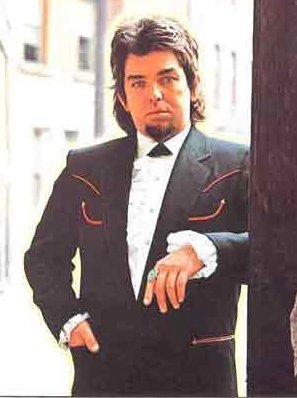
Don Van Vliet, born Don Glen Vliet
January 15, 1941

Happy Birthday


Andrea Martin born January 15, 1947

Response to Part I

1. Thanks to all first-time visitors, and especially to those who left comments. Stick around for Part II.

2. Regular readers of this little hole in the blogosphere know that my wife is a public school teacher. She's been one for over fifteen years. She's taught in a wealthy utopian "exburb" district and in the worst-performing inner city middle schools of IPS. She now teaches in the high school Magnet program, and is highly regarded. As an art teacher her direct experience has more to do with funding, or the lack of it, than the particulars of fad-of-the-month and political pressure on curricula of teachers in the "hard" subjects. Still she's plenty affected. She presently has a class (non-Magnet) of forty students in a room with thirty seats. I invite anyone interested to try it.

3. I've put my arm around her as she cried uncontrollably over the home life some students endure. I've stood beside her at the funeral of a sixteen-year-old who was shot by a crazy woman whose son he bumped on an apartment staircase. I've researched OSHA laws to prevent uncaring administrators from shutting her paint-and-solvent using classes in an unventilated room, and I've read Indiana employment laws to put a stop to a business using her students until 2AM on weekdays. I'm no mindless cheerleader for incompetent teachers, unions, administrators, and politicians. I think there are enormous structural problems with our Factory School programs in this country.

4. Be that as it may, I believe, from an admittedly limited and non-professional perspective colored by my unapologetic political biases, that the greater problem for our schools over the last thirty years has been political meddling which has sought to portray public schools in the worst possible light, and often a racist one at that. This is not to impugn the honesty or sincerity of everyone who disagrees with me. It is rather to say that the landscape must be cleared of half-truths and hidden agendas, and the case for public education made over and over.

5. This is just my web journal. I talk about whatever catches my fancy. This weekend that's the 20/20 report. I have a rough idea that after dealing with that I'll write another piece more descriptive of our public educational system. Or I might get distracted and rate some power tools. There are plenty of good professional education sites where people don't just talk off the top of their heads.

Let's go to the phones:

Chris:
There are those who will mischaracterize Stossel as being “anti-education.” This label is inaccurately conveyed, as it should be labeled “pro-education reform”. So to use “anti-education.” and denominate those is misinforming.

As my personal bodyguard D. Sidhe has pointed out, I didn't call him that. I'll have more to say about Stossel's motivation later, but the short answer is, you can't reform what you refuse to understand beyond a caricature.
The “War on Public Education” is a straw man. There has never been such a war.... [There] are simply observers, who pointedly remind us of the many facets of public education which can use serious reform....Part of the debate is calling a spade a spade, shining a light on egregious examples of the misdeeds of public educators, their union, administrators, and aspects of the system itself.

I'll talk about unions in the next part. But frankly, the denial that there's a war on public education doesn't jibe with the strong anti-union sentiments that so frequently accompany it. I never hear an opponent of teacher unions or the "educational establishment" discuss what these groups actually do, just offer horror stories and assertions that bad teachers can't be fired.

pebird:
The U.S. spent around $3,700 per student in 1970. Using the handy-dandy government inflation calculator...we find that would purchase $18,843 in 2005, pretty close to a private school tuition.

Interesting in that one of Mr. Stossel's informants claimed that education spending had doubled, adjusted for inflation, in that same period.

Parents for Competitive Education:
Your defensive tone, angry words, and shallow ranting proves unequivocally that Stossel and ABC are right on.

First time reader, I take it. Stossel should have had me on, I guess. Would have saved a trip to Belgium.
Introducing competition, and making schools and teachers accountable for student performance, would give the U.S. education system the intellectual and organizational reform it so badly needs.

[shallow rant alert] "The good news, Janie, is you passed into the fourth grade. The bad news is, we're downsizing it." Competition is a tool; you'll have to excuse me for passing whenever it's offered as a panacea. We have competition now, for the wealthy and a few lucky Lotto winners. And as Stossel pointed out last night, 57% of the public gives its own public school an A or B. When I hear the plan that takes care of the poorest of the poor, and the most hopeless, as its first priority, I'll listen.

Peter Jackson:
[T]he main question I have for the anti-reformers is this: if a universal voucher system destroyed public education, how would we tell?

Off the top o' me head: when the only students left in what remains of our public schools are the special needs children and disciplinary problems the private schools now routinely dump back on them, if they accept any in the first place. And when the rising price tag is used as an excuse to rejigger the system, as it will be.

Tango Man:
You quote Stossel as saying: "Here in Belgium the government spends less than American schools do per student..." and you offer some unlinked data to support your attempted falsification of his thesis. Because I couldn't easily find the data you were basing your analysis on, I searched and found better data. Here it is:Expenditure on educational institutions per student (2000)BelgiumPrimary education: - $4,310.15All Secondary education: - $6,889United StatesPrimary education: - $6,994.63All Secondary education: - $8,855.06Expenditure on educational institutions per student relative to GDP per capita (2000)BelgiumPrimary education: - $16.33All Secondary education: - $26.10 United StatesPrimary education: - $20.21All Secondary education: - $25.59So, Stossel is correct on his point. The only place you can find a technical violation is in regards to secondary education when analyzed on a per capita basis, and it's quite a minor quibble at that.Further, your choice of using % of GDP is inappropriate. What Stossel asked was who spent more on education.

Thanks. I'm an old guy. I quoted the study the figures came from and the page number, which was sufficient in the last century. I didn't link it in part because it's a 70-page .pdf file, and the citation was sufficient to check my accuracy. I'll dig up the link if you'd like it.

Why I used % of GDP: first, it's the method from the test study Stossel was (presumably) using. Second, the spending in actual dollar figures (I didn't avoid them, btw. I didn't look, partly for this reason.) is something of a canard. "What Stossel asked" was a loaded question; the only way to truly compare the two would be to look at services. Percent of GDP certainly offers a better way to compare government commitment to education, I think, but either that or actual dollars/student leave a lot of questions unanswered. What do we spend on athletics, say, vs. Belgium? Believe me, athletics has a lot to do with parental approval; we're planning a high school athletic Magnet program for IPS here despite a plummeting budget. But they don't test hand/eye coordination on the PISA. To use the car analogy, it's not a question of who spent what, but who got what. Korea and Japan, for example, spend less as a percent of GDP than the US does, but they pay their teachers more.

The OECD report found a slight correlation between expendature and performance. So there are obviously a number of other factors involved. It was wrong to say Stossel "fabricated" the numbers without an exhaustive search for evidence, but then he's the one doing the network television report. He had the time for a citation. And his "question" simply ignored all complexities.
So, let me get this straight. Your criticism is that he targeted these districts as being unrepresentative of the nation's school districts but you let stand his characterization of the facts unchallenged. Is that right? Everything Stossel said was accurate,but only for NYC and Washington?

Um, well, the only "facts" Stossel offered about either, besides the general drift of the report, was the final section about NYC unions. And that's in the next part.
...could you sketch out a cursory argument of the perils of choice?

My comment was that "choice" was a major theme of the first part of the report. I don't think that can be addressed in a cursory way; maybe later, more fully.
"Program impacts on school environments were considerably smaller than impacts on neighborhoods, suggesting that achievement-related benefits from improved neighborhood environments are alone small." So the parents are acting to separate their kids from whatever bad influences they perceive, whether justified or not, whether rational or not, whether moral or not. Those parents are making choices but have to go through a convoluted process, rather than a straightforward one.

The major predictors of academic achievement are socio-economic status and parent's educational level. If we're really serious about not Leaving Children Behind we'll concern ourselves more with getting them adequate nutrition and health care, and much less about how they compare with Poland.

What's the "straightforward" process? Everybody on the bus, we're going to the successful school?
Umm, it's pretty boring for a TV reporter to stand in front of a camera and hold a document and tell the audience the content of that document. It's quite a bit more engaging to create a situation that is dynamic, such as using real students, the students taking the test, the commentary from the students. As near I can tell your beef with Stossel is that the test results, which indeed supported his thesis, were unduly amplified by his selection bias. So, it's the amplification, not the binary truthfulness that is the problem.

The way it's boring to wait a couple minutes for the Pinto to actually catch fire? C'mon. What stopped him from reporting the actual results, and admitting his little teevee dynamic produced results worse than average? There was a lot of talking heads stuff in the report. In the NYC union bit he unfurled a diagram instead of dramatizing the process.
You're citing Middle School curricula as a mitigating circumstance to excuse the lowering of student performance because middle school is preparing the students with a good foundation for later study. Is that right? If so, please back it up.

What I said was that's one of the arguments offered in mitigation. And it is. That's all. Neither this blog nor that last post is my life's work.

Saturday, January 14

All Knowledge Is Incomplete Knowledge, But Some Is More Incomplete Than Others


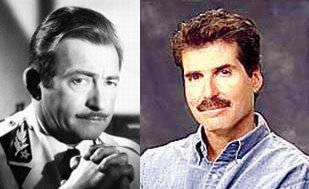
Maybe it's the 'stache...

John Stossel, ABC-TV: "Stupid in America: How We Cheat Our Kids"

SO right off the bat you might be asking yourself just how balanced a report you're getting when it uses "Stupid" and "Cheat" in the title, but of course you don't ask because it's John Stossel. I know we repealed the Fairness Doctrine. When did we repeal fairness?

And I am not making this up, I've got it on tape. The show opened with successive clips of Fast Times at Ridgemont High, Bill and Ted's Excellent Adventure and Ferris Bueller's Day Off, the last featuring a clip of Ben Stein as a boring drone, the role he was born to play, followed by a Student on the Street interview with a young lady who said some of her teachers were boring. Oh, my god, it's worse than I even imagined!

I was certainly prepared for an hour of anecdotal or cherry-picked evidence. I was prepared to see vidclips of anyone who disagreed with Stossel's divine wisdom edited to make them look shrill or mendacious. I did expect there might actually be some reasonable doubt expressed reasonably, though I was prepared to be disappointed. But God help me, I'm not sure why it is I was unprepared for outright fabrication:
Here in Belgium the government spends less than American schools do per student..."

when that's easily checked using the figures from the very test program that Stossel is using (both in the sense of "to employ" and "to manipulate cheaply for one's own gain", though I'm not sure those don't mean the same thing to him), the Organisation for Economic Co-operation and Development's Programme for International Student Assessment, or PISA, tests. "Expenditure on Educational Institutions", from the chart on page 67 of the 2004 report:

Belgium: % of GDP, Public Schools: 5.97
United States: % of GDP, Public Schools: 4.66

Maybe it's just that some of our adults have a little problem with advanced mathematics, too. But then, per the report, Belgian funding "follows the student" into the school of his choice, so perhaps the 6.36% of GDP spent on public and private schools combined is more apt.

There's some more curious business involving Belgium and the PISA testing, but let's start at the beginning. I nearly did a full Kreskin on the thing, putting the following prediction in a sealed envelope: the first thing Stossel's gonna do is focus on New York City and Washington DC public schools. Why? Because those massive urban districts are a great favorite of the anti-union crowd, which likes to extrapolate to the entire country by inference, since they can't do it by fact. Sure enough, after we got done (with no apparent recognition of the irony, by the way) with showing that our perception of public schools comes from comedies aimed at young adults, we find the Mustachioed Muckracker trying, and failing, to get his cameras into NYC schools. Then DC alows him to tape, but only in an exceptional class taught by the National Teacher of the Year. No fair. They finally manage to get DC to agree to giving students (Stossel emphasized the district "hand-picked" the students, thereby underscoring the fact that he doesn't understand the first thing about supervising children) video cameras to film inside their schools. The results were suitably shocking:

•We see a young man remove his shirt and do a little spastic dance as the teacher sits apathetically in the background.

•We visit a geography class where students are playing Monopoly™. A smirking, attempted-teenage-bearded wiseass of the sort my wife treasures but I'd put in the hospital within twenty minutes of the bell leans directly into the camera to say "We're going to ask Mr. Dryner what Monopoly™ has to do with World Geography." We get a longer shot of Wiseass with his sandals ostentatiously up on his desk, and other students behaving badly.

Aha! Just the sort of thing we all knew was going on in "real" classrooms that weren't being taught by National Teachers of the Year.

Except, no, not quite. Even Lyin' John is forced to acknowledge that this class was taking place after finals. Any of you go to public school by any chance? Did you sit in your seat quietly and study on the last day of school? Could any thing short of the imminent application of superior physical force have made you?

Now, don't get me wrong. This sort of stuff drives my wife crazy. There are teachers who spend the last several days of the school year showing videos. She makes her students work until the final day, and every year has to endure the "Mr. So-and-so let us play games" bit. In fairness to Mr. So-and-so, she's teaching Art, and that's a lot more like play, plus it's a Magnet program, and students must understand that they aren't getting out of her class; they're going on vacation and will return to their chosen field of study in a couple months. In fairness to all of them, it's hot, not all the building was air-conditioned until this year, and the students just want to be out. It's discipline hell.

So the last thing you'd want in your class is a freakin' video camera, and I have to wonder about the mental competence of whoever it was agreed to (or was tricked into) it. It's not actually clear that the teachers knew they were being taped, but it's clear the children did.

This, of course, is not the view we get of the Miracle Schools Stossel shows us. Well-behaved children, often in uniform, eager to learn, required to police the grounds and set up tables for lunch, all of them progressing at remarkable rates. No attempts here to go behind the scenes for a peek at what "really" goes on. No complaints that we're being given the official tour by a hands-on administrator. Nope, this is how it really works when you give parents a choice.

"Choice" was a big theme of Act I. Why can't parents choose what school they want their children to go to? Why do some parents go so far as to lie about their place of residence to get their children into "good" schools? Most of the countries that score higher than the US give parents choice.*

This is going to take us to Belgium shortly, but let's just note a couple things first, here. Stossel has already told us money isn't the answer. So why, then, are these schools of choice uniformly in wealthier districts? Parents aren't clamoring to get their children into schools with poorer equipment and fewer programs. Yes, there are a number of factors involved, but the inequalities in the American public education system are a national disgrace. Why isn't that a part of the show? And what exactly is the Libertarian theory that excuses it? We believe that Choice is a supreme good, but children don't choose to be poor.

But teevee producers can chose to fly to Belgium, and this segment was verrrrry curious:
"We gave parts of an international test to some high school students in Belgium, and in New Jersey."

Tonite on ABC it's the Belgian Waffles vs. Your New Jersey Barrens in a Texas Chain Saw Math Test! Whoa. I know it would violate standard Stossel practice, but is there some reason you don't cite the test? There's only one international test to speak of: PISA. And so is there some reason you give the test to two small groups of students, rather than use the results of the much larger sample of the real test? Yeah, probably.

This has a distinct Pepsi Challenge air about it already, but let's dig a bit deeper. We have no information as to who these Belgian students are; we do know that the Americans are a diverse group from a Jersey public school. That "parts of" thing is a little hinky, too. The PISA test comes in three parts: reading, science, and math literacy. But in a moment we'll reveal the average scores of our two competing teams, and it'll be a single number. So we didn't give two of the three parts; did we give selected portions of the math test?

Math is where American students in the tests for fifteen-year-olds score the poorest. Our ten-year-olds score above international averages, but the fifteen-year-olds trail the country mean by 3%. Which gives Stossel grounds for claiming "the longer kids spend in school the worse they get." But one of the factors that've been cited for our poor performance is that middle school, which these students have just completed, is in America something of a spin-your-wheels period. We tend to use those grades to reinforce what has been learned, to prepare for more advanced study ahead, and to separate students in terms of academic achievement. And it's the time when students expand into other areas of study and encounter their first elective courses. The countries which score highest tend to have a more conservative approach, spending more time on traditional subjects and having fewer areas of study available, and generally use testing at that level to determine a student's further academic opportunities.

So at the very least we gave a small sample of the test to two groups when we could have just looked up the results of the real test. I'm assuming here it was math. And the final score? Belgium in a walk 76-47. Way to go, Waffles! Especially impressive performance, seeing as how in the real test the USA scores were 91% of the Belgians'.

This may have been partly explained by the Jay Leno routine we did with the class (after showing a couple of real Jay clips, that's weeknights at 11:30, right here on this station; Jay befuddles one young couple by asking which state hosts the Kentucky Derby, and hilarity insues). One student couldn't name a major cause of the Civil War; another couldn't tell what the Bill of Rights was. A third opined that "we're not stupid. It must have something to do with teaching," but honey, and I mean this in a nice way, if you don't know enough to say "Slavery" when someone asks you about the Civil War I'm not sure it matters whether your teachers are even breathing or not.

NEXT: Unions support child molesters, Phonics work miracles, and John gets bad service in a Soviet restaurant.


* This is probably a matter of educational organization, but given Stossel's track record with the truth I intend to research this one, too.

Friday, January 13

Friday Boring Personal Stuff


• That's the fire hydrant next to my property. The amusing little chapeau came courtesy of the Water Co. we sold to private investors a few years back. I love the lime green; it hasn't at all been nauseating me for a decade now on every home makeover show I have the privilege of paying for each month. iz dis gonna b kewl 4 evah?

What happened is that we had our third major water main break in four years last November. The actual break occurs two blocks east up the big cross street to our south, but we're just one lot south of the (usually dry) creek bed it all runs into. As with the last two, it was fixed in a few hours. This one wasn't nearly as spectacular as the preceding ones.

But then a different break occurred on the other side of the street a couple weeks later, and that one just sort of bubbled and oozed away. It seemed to stop for awhile (nobody saw any repair crews), then rebounded early Christmas week. It was the following week before they showed up to fix that one.

Then last week I was driving home and a very large truck had our very small street all but blocked. I had to stop to let a car coming from his direction pass me. As I got to the other side I saw the guy who was supposed to be directing traffic, well, not directing traffic. There was an identical truck straight ahead, and sure enough it was parked blocking my driveway. They were running a line down a hole in my neighbor's yard.

Two days after they finished that, I noticed there was a sizable pool in my neighbor's yard. I waited a couple days, and when it was still there I called the company to report it. (My neighbor doesn't see his lawn in between the time he mows it for the third and last time of the season, usually in August, and the time one of his children gets lost in it the following June.)

They came out the next day and gave it a hat. That was Tuesday. I'm gonna remember this next summer when they ask me to water my lawn at night so the golf course sprinklers won't lose pressure.

• For those of you following my wife's room assignment saga...oh, first, yes, Kathy, I really did fart in that woman's general direction. It's not particularly a talent I've nurtured. I have diverticulosis, and one of the prized items on my diet is a tablespoon of peanut butter now and then, but I'm only a man, dammit, and sometimes it tastes good enough I have a little too much, and some evil crackers. So it was just fortuitous, only not for her.

Well, it won't come as much of a surprise that the Evil Cabal of "regular" art teachers actually reneged on the whole administration-mandated room assignments and just stayed where they wanted to, meaning that the largest, most desired room (it has storage) now sits empty all but two periods a day. This resulted in a nasty email from the Big Office, but no disciplinary action. My wife, however, is now so fed up she isn't even speaking to me, no doubt on the grounds that that's preferable to what she'd say if she did talk. If it continues over the weekend I'm suing somebody for alienation of affection and loss of marital services.

Courting Disaster

There's really only one reason I have no interest in blogging Court appointment hearings: disgust. The Court is the area where my ability to swallow large draughts of Democratic Party swill in exchange for the occasional shot of fine anti-GOP spirits (a sort of reverse Boilermaker) is tested and found wanting.

Before this really sets me off, three pieces which say what I would have said if I were 15% smarter and my patience was closer to the Book of Job than the Book of J◊B rolling papers:

Michael O'Hare: A Piece Missing

He doesn't have a screw loose; what he has is a piece missing, conspicuously, radiantly, displaying an apparent absence of any sense of, well, justice. Not a case came up for discussion in which he registered that one or another outcome was just wrong, outrageous to a sense of decency, or to him....It wasn't exactly Pilate washing his hands, but the man appears to be completely comfortable dealing with frightful social wrongs by moving the issue down the hall to another office. Sometimes the Court has to do this, but to Alito it's an especially good day's work, not a disappointment.

Mark Kleiman: The CAP flap
Alito's membership in CAP is an especially painful issue for his supporters because CAP revealed starkly a truth about conservatism that most contemporary conservatives prefer to hide. That dirty little secret is that, in addition to its intellectual content, conservatism as a political tendency and a movement has a social content. The social content of conservatism is partiality toward those of higher status and greater social centrality and hostility to those lower down the social scale and further toward the margins: rich over poor, white over black, Anglo over Latino, Christian over Jew, Muslim, Hindu, pagan, or atheist, straight over gay, male over female.

(Kleiman also decribed Alito's convenient memory lapse as a "subsequent attack of Waldheimer's Disease" for which, assuming it's his coinage, he deserves enshrinement in some Lexical Hall of Fame somewhere.)

And Peter Daou: The (Broken) Triangle: Progressive Bloggers in the Wilderness
But rather than a Democratic triumph, the Alito hearings have thrown the dichotomy between the netroots and the Democratic leadership into even starker relief, illustrating the profound dysfunction of the left’s triangle. As well, the depth and breadth of media complicity and the obliviousness of so many Democrats to it, is alarming. From the choreography of Specter and Alito creating the "open mind on abortion" soundbite that media outlets dutifully ran with, to the Sen. Graham/Mrs. Alito tear-fest that should have prompted Dems to slam the Republicans for bringing the Judge's wife to tears but instead turned into another Dem-bashing occasion, to the complete failure of the Democratic leadership to create the appropriate tone of outrage (in soundbite form), the chronic breakdown of the establishment and media sides of the left's triangle is apparent.


Maybe it's a function of chronology: I grew up thinking, and being taught, that the Court had, beginning in the late 40s, begun to enter the modern age and to correct the old imbalance between personal and property rights. I had teachers who told me, as a sort of Constitutional algebra, that as a man ascended to the high point of the legal world, and surveyed with proper solemnity the Shining City spread below him, he naturally became more liberal, more compassionate, more of a defender of the law's true spirit.

That all ended before I was able to vote, when Nixon managed to get segregation-apologist William Renchburg, er, Rehnquist, onto the Court. Illusions die a painful death at that age. And it's been basically downhill since then, despite the slim majority keeping reproductive rights alive, despite the defeat of the Abominable Bork.

It's a party of public liars and private thieves. In politics you do watch this as a slow-motion train wreck; granted enough years you see the Bush administration as the logical culmination of the criminality of Nixon and the Hollywood phoniness of Reagan. And the Democratic party facilitated it. They facilitated it at the end of the Watergate hearings when they refused to follow the money trail into the halls of Congress. They gunned down their own in Jimmy Carter, then waved the white flag for Reagan. Funny how it still required a power grab to complete the deal on Reaganism, despite their surrender, because like his idiot bastard cousin a quarter century later he didn't have enough occupying troops either. Funny how all those problems the Great Communicator used to communicate to us are with us still. Today there's no Reagan legacy except in hagiographies by the likes of Peggy Noonan, because it was all about power and nothing about principle. Reagan didn't have the guts to solve problems. He didn't lead, he ran around looking for parades to jump in front of. And the Democrats played along.

Then they finally break the cycle of Electoral College humiliations, and what do they do? Shoot Bill Clinton in the ass over health care. Health care! What Democratic party principle did that violate? The sacred belief in polls and campaign contributions? Republicans rile up their red-meat constituencies then take the money and largely ignore them. Democrats take the money, then run scared of their own constituencies. What did that get them? The chance to wave the same white flag twenty-five years later.

The Court has been tilted to the right for all that time. And because of that we sit here today conducting the same debate we did in the Eighties, namely, the debate over the Sixties. The right lost the culture war, but won the political battle. But the spoils of politics are money and power, not the ability to dictate how people think. The Mamon servers of the mass-market media have done what they could to help, but the fact is we have a polity which does not reflect its citizens, who do not want the return of back-alley abortions, do not want Christianity taught in public schools, do not want the government or its affiliated corporations laying waste to their neighborhoods in the name of profit. If I walk up and down my little Middle West middle-class suburban block with a lit joint, knocking on doors and saying, "Hi, I'm your neighbor, wanna toke?" 75% would let me in, and we're talking about largely white, somewhat above-average income earners. If I did the same thing with a Bible in my hand and announced I was there to talk about Jesus, at least that same percentage would shut the door in my face.

But we're about to enter into the era of the Right-Wing Catholic Court, the life-appointment version of the earlier Racist-Dixiecrats-Change-Parties Executive. The logical conclusion to the latter is the continuing disaster that is the Bush administration (interesting, last evening, to catch some of the News Hour as "experts" debated our next move in Iran, as though we're just gonna tidy up this little manpower problem in Iraq and get ready to shove someone else around). Will the long-term result of filling the Court with radical-right approved ideologues be a disaster of equal proportions, fluffed by the same mouthpieces of money and power? I don't know. The whole originalist/textualist sham that the right hasn't been able to resolve to its own satisfaction is probably going to come to a close, the same way Abolish the Department of Education became Let's Use the Department of Education once they had it back. Maybe there's a conversion in someone's Court future. What I do know is that whatever happens, it won't be because the politicians of the Democratic party did us any good.

Thursday, January 12

Fashion Statement


Apparently Jack Abramoff not only set back the cause of fedoras another thirty years, he also set off a minor storm of idiocy and the blogosphere's world-renowned self-correcting feature. JPod called it "the black hat of a very Orthodox Jew," and David Brooks' crack research squad came up with "pseudo-Hasidic homburg," which manages to be wrong three times in just three words, probably a record even for him. Howard Fineman and MoDo, those starry-eyed Romantics, spied a gangster thing going on.

It was left to Stepehn Hirsch in Salon to straighten things out with some expert testimony. It's a Borsalino Como:
What struck me was that Abramoff was wearing my hat, a Borsalino, the ne plus ultra of Yeshiva boy caps.

I couldn't pick that out from the teevee loop I saw a half-dozen times, or any of the still photos (I've lightened the one above to bring out the details). Not sure I could have, anyway, but ne plus ultra it is. Borsalinos are the best, and the Como is their best design. It was actually on my short list last time I made a hat purchase, but I got a summer and a winter porkpie instead. And saved a lot of money.

Abramoff is an Orthodox Jew. So the hat is neither pseudo-anything, nor is it Hasidic, and a homburg it most definitely ain't. Hirsch speculates that Abramoff might have been seeking his comfort zone. Okay. But how'd he screw up a $200 hat?

There's been some quibbling about crown height and brim width. I think he's a little shy on the width--it should have been available in increases of 1/8 inch, and the salesman should have told him his face required a little more of it. The crown seems okay to me.

But look at him--he looks like he took the thing out of the box and plopped it down on his head with a T-square. Work the thing first, man. The center crease is too deep; that might not have been amenable to to manhandling, but the haberdasher could have steamed it for you. And those side dents look like they were made by machine. It's your hat! Make it your own. Roll the brim, push it down, do something.

Looking at it, I can't help but think of the pseudo-style and pseudo-elegance of all the wealthy Reaganauts of a certain age I knew, the ones who bought Italian suits and silks and still looked like they shopped at Penney's. The guys who thought they were knowledgeable because they could say "Cohiba". The ones who read The Wine Spectator and bought up designer California cabernet and first-growth Bordeaux, then drank them five years before they were ready, after making sure their guests saw the label. The ones who thought money equalled quality equalled class, and class meant you were more worthy than the next guy.

Just where the hell have you gone, Joe DiMaggio? In the living memory of some of our older citizens, American culture, American food and wine, American style meant cornball. That wasn't always deserved, but we had a national inferiority complex about it. Sometime in the 70s we decided to change that (a direct result, if I may say so, of the evil Sixties countercultural interest in the handmade, the purely decorative, and the foreign). But somehow with Reagan we simply jumped to the self-congratulatory stage without ever paying any dues. Which is why we now turn out boatloads of halfway decent $15 wines that cost $50, and why we make superstars out of some guy who puts his hands all over your food before charging you $75 for a meal. Finesse and hucksterism do not mix. You think Fred Astaire would have worn his hat like that?

Ultimately, that damn thing just screams aging Yuppie scum. Which is fitting, I guess, even if the hat isn't.